Last updated: June 2026
Plumbing websites are not like other service websites. A customer landing on your page is usually stressed, burst pipe, overflowing toilet, flooded kitchen. They are not browsing. They need a number they can call right now.
Most plumbing websites in Singapore fail this test. The phone number is small, buried in the footer, or hidden behind a contact form. This guide explains what actually converts emergency plumbing enquiries on mobile, based on how customers search and behave in Singapore.
Design for panic, not polish
A stressed customer makes a decision in under ten seconds on mobile. Can I call right now? Does this business look real? Will they come fast? If any answer is unclear, they tap back and try the next Google result.
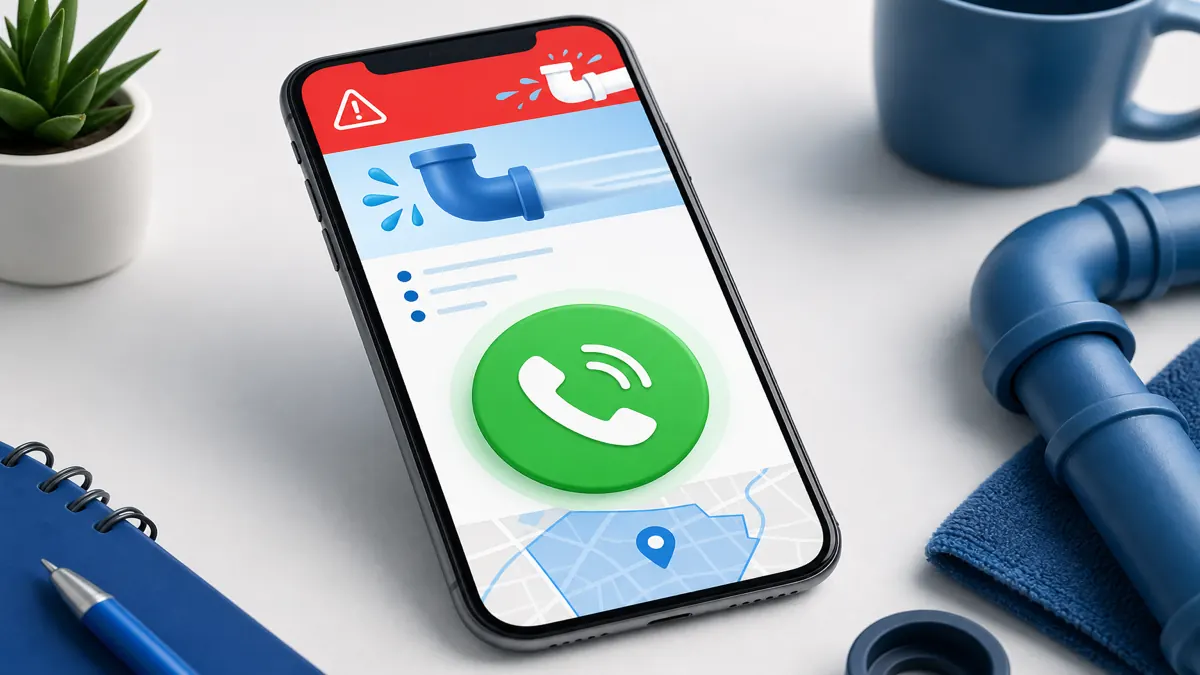
That means the phone number is the hero, not your company history. A dark, urgent-feeling layout with a massive tap-to-call button converts better than a friendly, polished design with contact details tucked in the corner.
WhatsApp works for non-emergency jobs and photo sharing, but for true emergencies, call-first design wins. The form is a backup, never the primary CTA.
Five things every plumbing website needs
Phone number above the fold
Visible the moment the page loads. Tap-to-call on mobile, not copy-paste from the footer.
24/7 or hours stated clearly
If you are available at 2am, say so prominently. Ambiguity costs calls.
Problem-based service labels
Customers search "burst pipe" and "choked drain", not "plumbing services". Match their language.
Rough pricing or starting rates
"Drain unblocking from $80" builds trust faster than hiding prices entirely.
Service areas listed
A customer in Tampines needs to know you serve their area before they call.
Mistakes that cost plumbing businesses calls
- Contact form as the only enquiry option
- Stock photos of spanners instead of real work
- No mention of response time or same-day availability
- Generic "professional and reliable" copy with no specifics
- Slow mobile load times when customers are in a hurry
Google Maps and your website work together
Most emergency plumbing searches start on Google Maps or local pack results. Customers tap your listing, then often open your website before calling, especially if they are comparing two or three plumbers.
A weak website sends them to your competitor even if your Maps reviews are better. Both channels need to reinforce the same message: fast, reachable, and real.
Quick answers
Should plumbers show prices on their website?
Rough starting prices help enormously. You do not need a full rate card, but ranges reduce awkward first-call price questions and filter customers who cannot afford your minimum call-out.
What is the single most important element?
The phone number. Everything else supports trust, but if they cannot call you in one tap, nothing else matters.