Last updated: July 2026
One of the easiest ways to overspend on a website is to build too many pages too early. One of the easiest ways to underperform is to build too few pages and leave customers with unanswered questions.
For most Singapore service businesses, the right website structure is not complicated. You need enough pages to explain what you do, build trust, and let customers enquire without making the site feel bloated.
The core pages most small businesses need
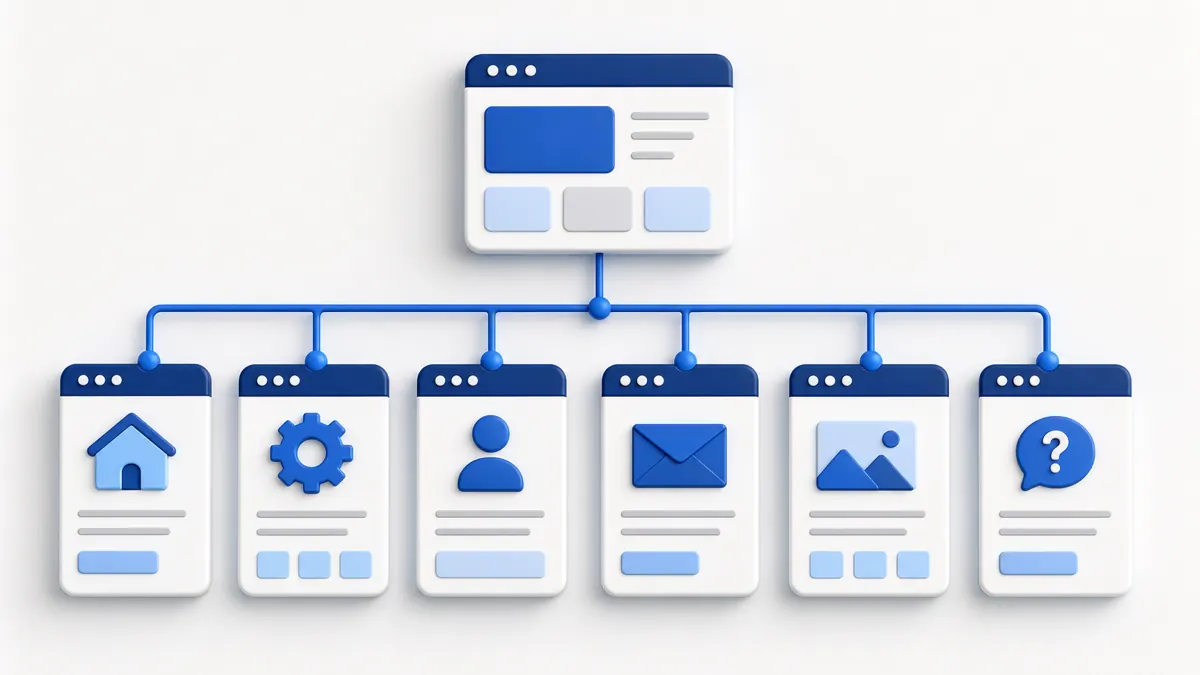
| Page | Purpose | When it matters |
|---|---|---|
| Home | Explain what you do and move visitors to the right next step. | Every business |
| Services | Show what you offer, who it is for, and how enquiries work. | Every service business |
| About | Build trust and explain who is behind the business. | Especially owner-led companies |
| Contact | Make calls, WhatsApp, forms, and location details easy to find. | Every business |
| Portfolio or case studies | Show proof through real work. | Trades, renovation, creative services |
| FAQ | Answer objections before customers contact you. | Higher-consideration services |
Separate service pages are useful when customers search differently
If customers search for each service separately, each major service deserves its own page. A cleaning company might need house cleaning, office cleaning, and post-renovation cleaning pages. A plumber might need emergency plumbing, toilet repair, and pipe leak repair.
This helps both users and SEO. The page can speak directly to one problem instead of trying to cover everything in a single long services page.
Start smaller if budget is tight
A simple four-page site can be enough at launch: Home, Services, About, Contact. Add case studies, blog posts, and location pages later when there is a real reason.
The goal is not to make the site big. The goal is to make the buying decision easier.
Pages you probably do not need yet
- A news page with no plan to publish updates.
- A separate testimonials page if reviews can sit naturally on service pages.
- Thin location pages that say almost the same thing.
- Team pages if the business is owner-led and the About page already covers it.
Common questions
Is a one-page website enough?
It can be enough for a very focused offer, but most growing service businesses benefit from separate service, about, and contact pages.
Do I need a blog?
Only if you can publish useful articles that answer real customer questions. A small, helpful blog beats a large blog full of generic posts.
Need help deciding your site structure?
I can help you plan the right number of pages before you spend money building them.